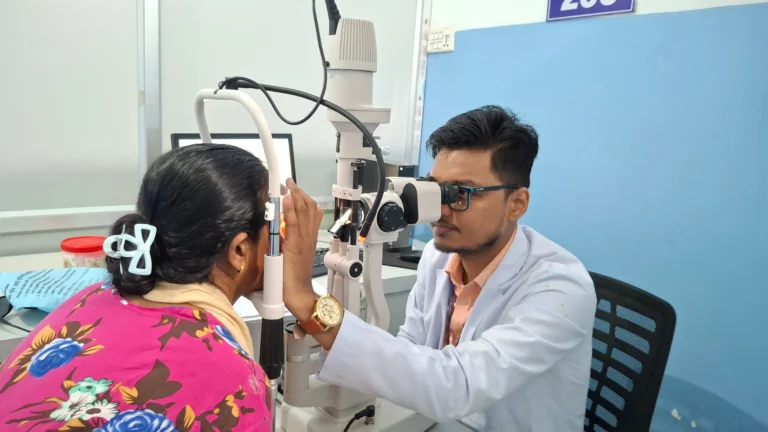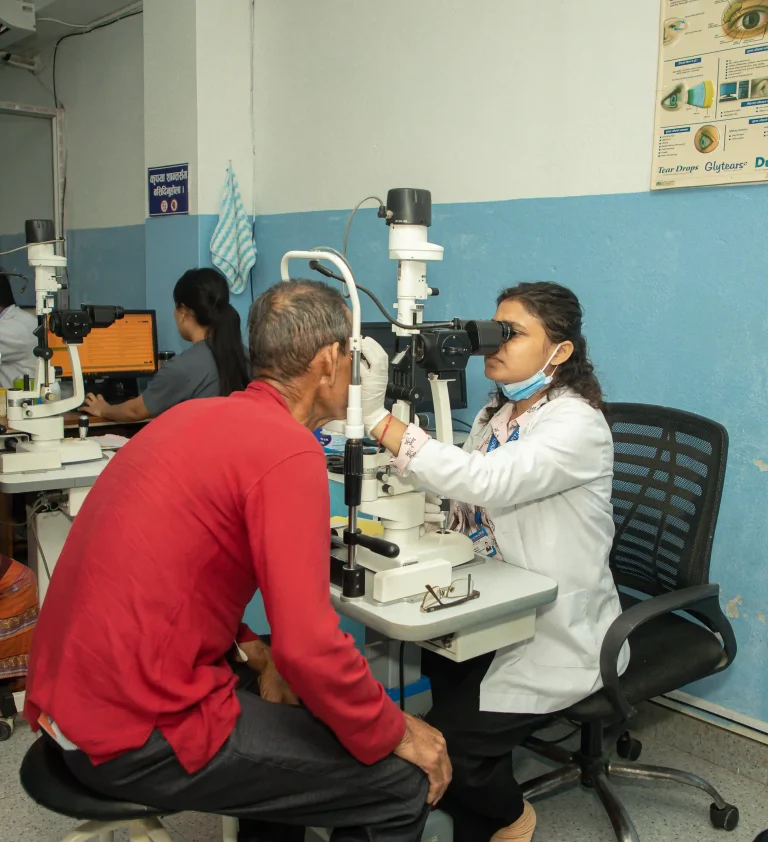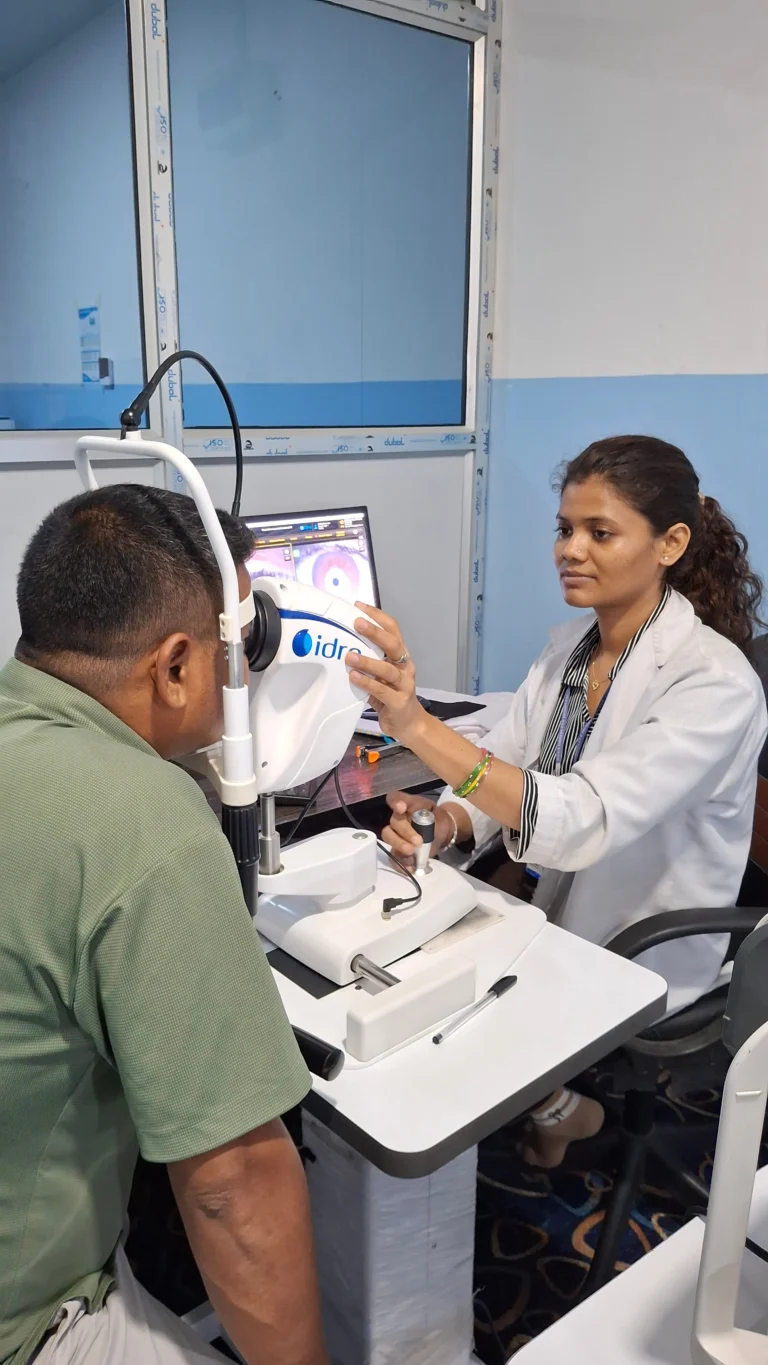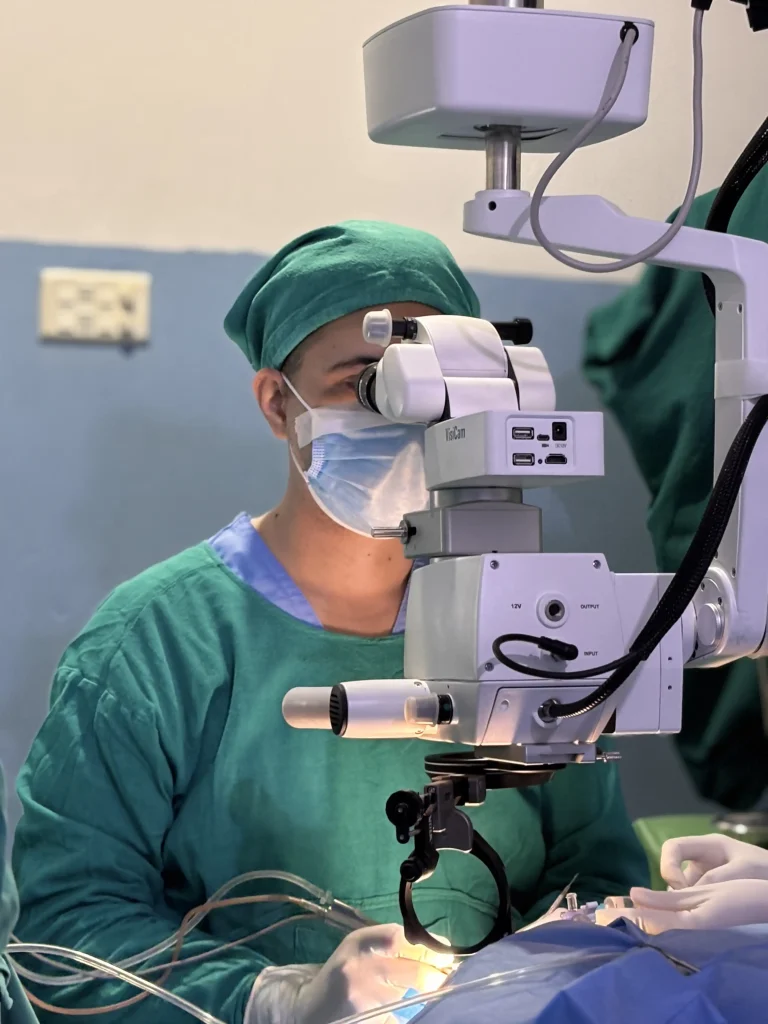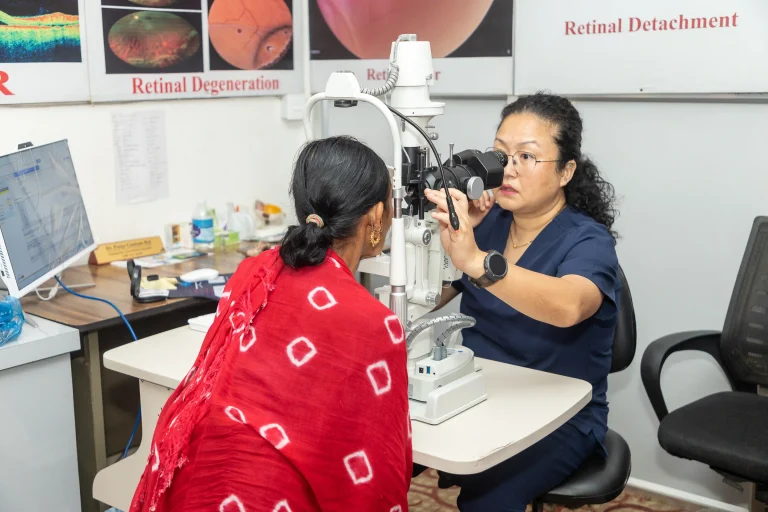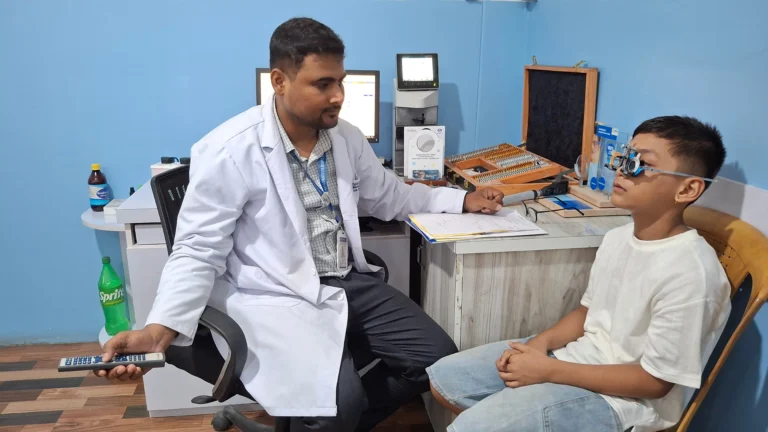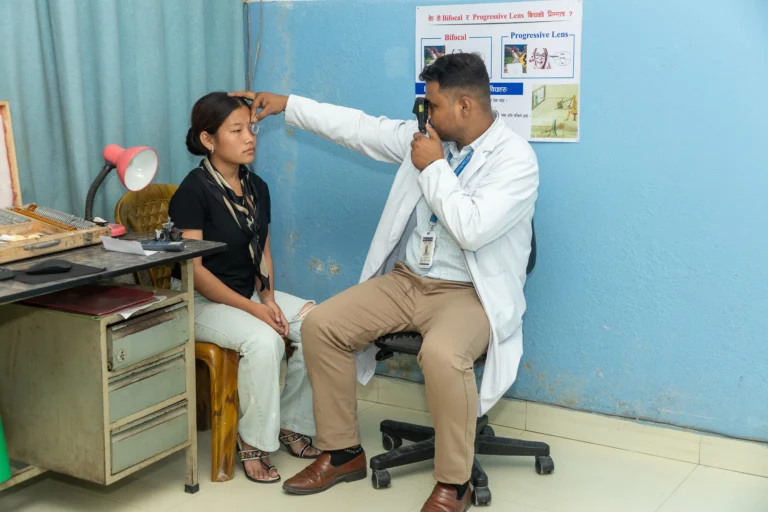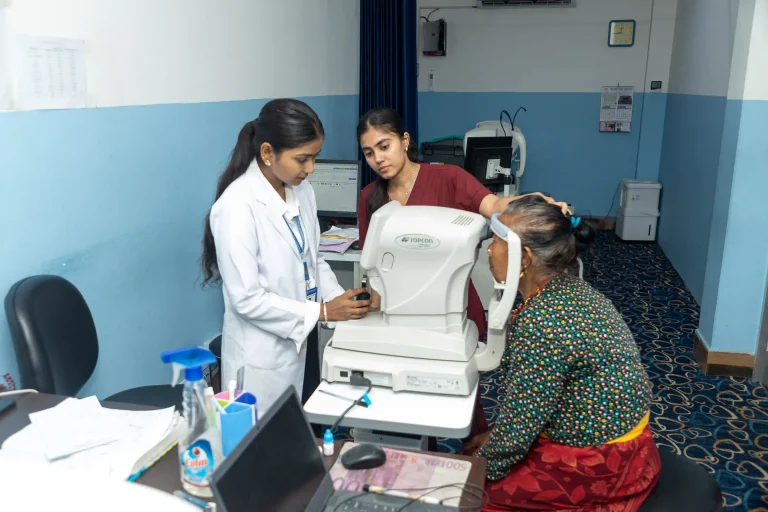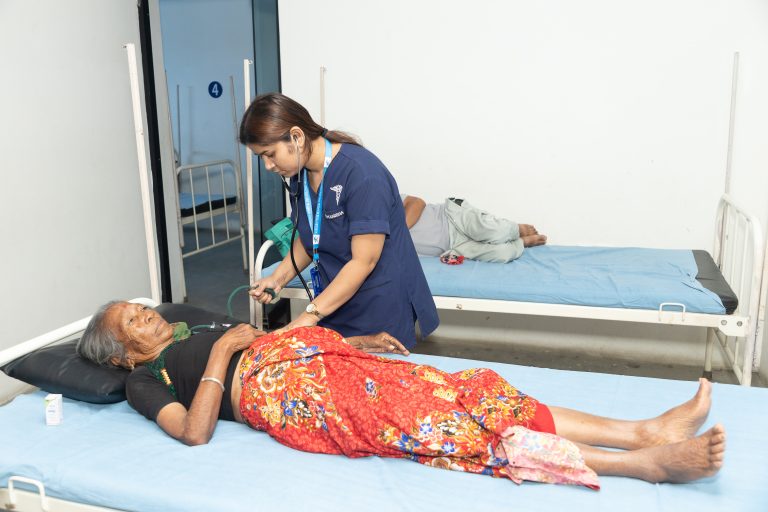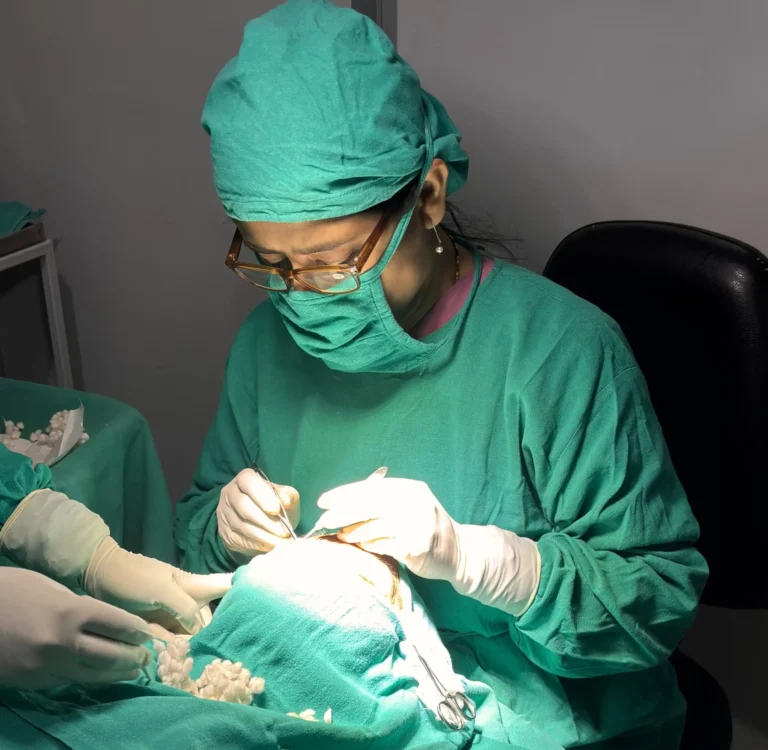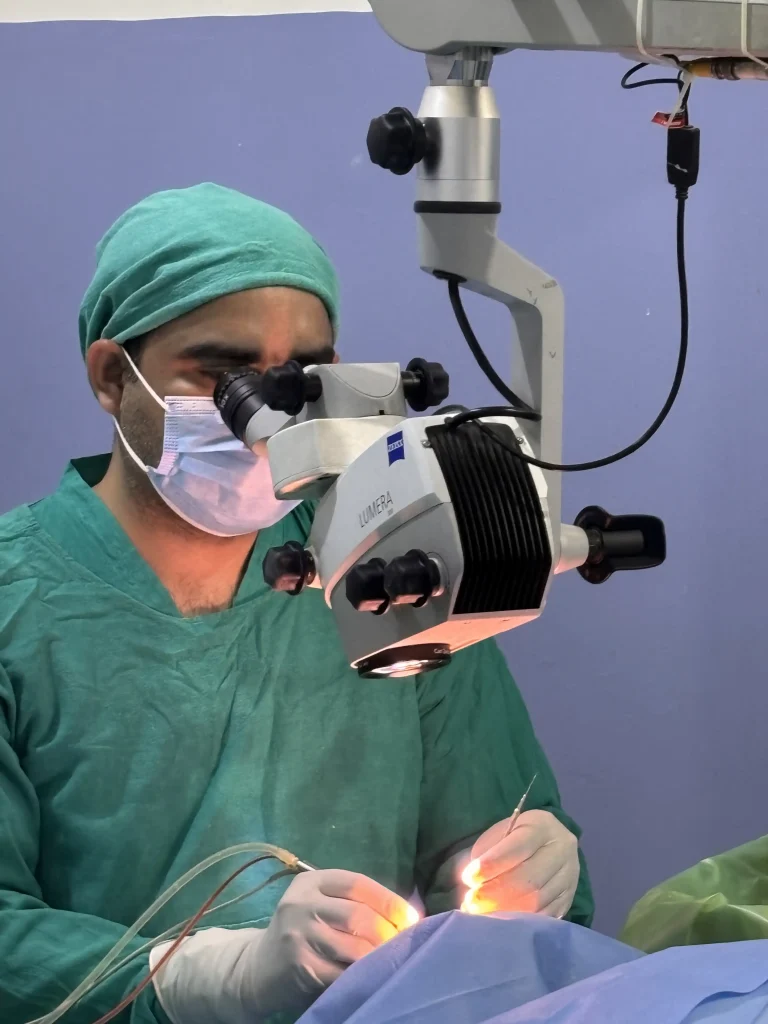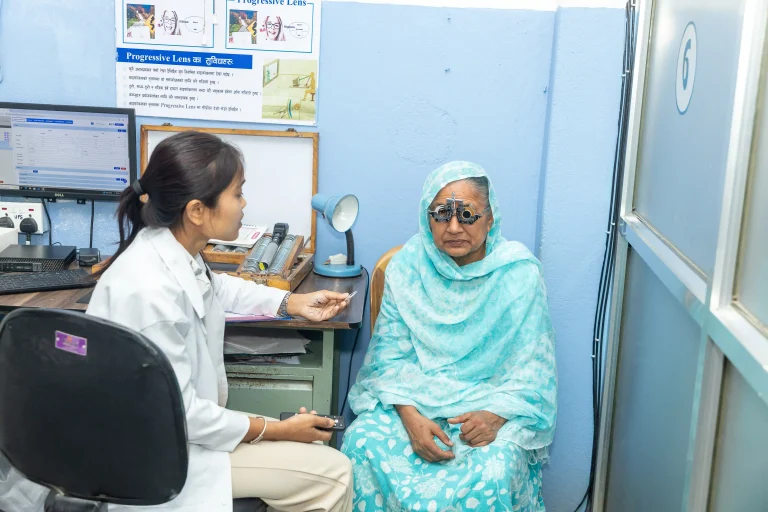
General refraction in Nava Dristi Eye Hospital is a routine, painless, and essential diagnostic examination used to determine an individual’s prescription for eyeglasses or contact lenses. It measures how light bends (refracts) as it passes through the eye's lens and cornea to focus on the retina.
What is a refraction test?
It is a process used to determine your eye's prescription for glasses or contact lenses, measuring how light bends (refracts) through the cornea and lens to focus on the retina.
How is the test performed?
- Auto-refractor: A computerized machine that gives an initial objective measurement.
- Retinoscope: A handheld light used to assess the reflection from your eye.
What do the results mean?
- 20/20 vision: You can see clearly at 20 feet what an average person sees at 20 feet.
- Refractive error: The eye cannot focus properly, causing blurred vision.
What are the common refractive errors?
- Myopia (Nearsightedness): Distant objects are blurry.
- Hyperopia (Farsightedness): Near objects are blurry.
- Astigmatism: Blurry or distorted vision at all distances.
- Presbyopia: Age-related difficulty reading up close (usually 40+ years).
FAQs
Questions? We’ve got answers
+ − Does it hurt?
No, a refraction exam is completely painless.
+ − Do I need eye drops for the test?
Sometimes, eye drops are used to dilate the pupils or to temporarily stop the eye from focusing (cycloplegic refraction) to get a more accurate measurement, especially in children.
+ − Why is the vision blurred after drops?
Dilation drops relax the focusing muscle, which can make near vision blurry for several hours.
+ − How often should I have a refraction test?
It is recommended to have an eye exam once a year for adults and children, or more often if recommended by an eye care professional.
+ − Can I get my prescription from a computer machine?
The auto-refractor provides an estimate, but manual, subjective testing by an optometrist is required to confirm the best prescription for your daily comfort.
+ − What is a "lazy eye" (amblyopia) in children?
It occurs when the brain favors one eye over the other, usually caused by untreated, severe refractive errors. Early detection is essential.
+ − When should I bring my child for a, refraction?
Children should have their first eye exam at six months of age, then at age three, and again upon starting school.
+ − What if I can't decide between two lenses during the test?
It is okay to guess or tell the examiner that the choices look the same. The process involves repeating steps to confirm findings.
+ − Are glasses or contacts better?
Both correct refractive errors equally well. The choice depends on your lifestyle, comfort, and, for some, the severity of the error.
+ − Can refraction detect other eye diseases?
While the primary purpose is to find a prescription, the comprehensive exam accompanying it helps detect diseases like glaucoma, cataracts, or retinal issues.